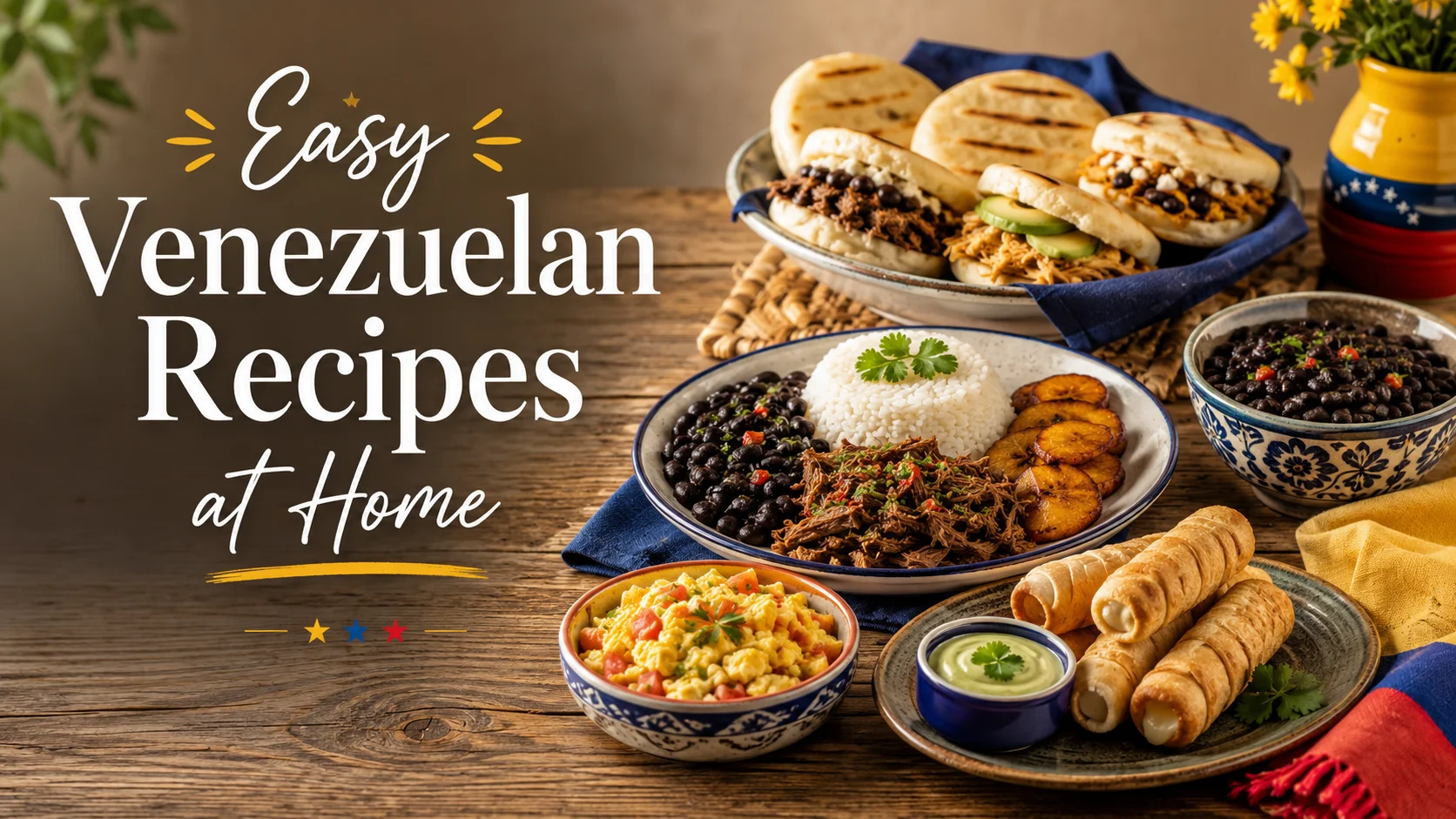
Easy Venezuelan Recipes at Home
By Mia Hartwell
Venezuelan food is one of the great under-travelled cuisines. Most people outside Latin America have never eaten it, and those who have usually met it through one dish at a friend's house or a small restaurant in a city with a Venezuelan community. It rarely gets a shelf in the cookbook shop the way Mexican or Peruvian cooking does.
Which is a shame, because it is unusually approachable. The ingredient lists are short. The techniques are skillet and saucepan work rather than anything specialised. There is no long list of spices to buy, no fermenting, no equipment beyond what is already in your kitchen. Of the six dishes below, four are genuinely simple, one takes patient handwork, and one is a composed plate that only feels difficult if you cook it in the wrong order.
What follows is a beginner's map rather than a stack of recipes. What Venezuelan food actually tastes like, the single ingredient that unlocks most of it, the six dishes worth starting with and what makes each one work, and then the practical part: what to cook first, how to build a meal from them, and what to put on the shopping list. Each dish links through to the full recipe when you are ready to cook it.
What Venezuelan food actually tastes like
The first surprise for most people is that it is not spicy. Venezuelan cooking sits a long way from the chili-forward food of Mexico, and the pepper it leans on most, ají dulce, is prized precisely because it delivers aroma and a faint sweetness with almost no heat at all. Hot sauce exists, but it lives on the table as an option rather than being built into the dish.
The second is how much of it is built on corn. Not corn as a side vegetable, but corn as the staple that stands in for bread. Arepas and cachapas are both corn in different forms, and between them they cover breakfast, lunch, and a late-night snack. If you cook one thing from this cuisine, it will almost certainly be made of corn.
Underneath nearly everything else is a sofrito: onion, tomato, garlic, and sweet pepper softened slowly in oil until they collapse into a savoury base. It flavours the eggs, the beans, and the beef, and learning to cook one down properly, until the water has gone and the pan is glossy rather than wet, is most of what separates a good version of these dishes from a watery one.
The result is food that tastes savoury, gently sweet, and comforting rather than fiery. Corn, beans, soft white cheese, ripe plantain, and slow-cooked beef, in combinations that have been settled for generations. Venezuelan cooking also has a serious written tradition behind it, most famously Armando Scannone's Mi Cocina: A la manera de Caracas, which remains the benchmark reference for how these dishes are made at home.
Before anything else: buy a bag of masarepa
There is exactly one ingredient standing between you and most of this cuisine, and it costs very little. Masarepa is precooked corn flour, sold as harina de maíz precocida and most often under the P.A.N. brand in a yellow or white bag. It is corn that has been cooked, dried, and ground, so it rehydrates into a workable dough in about five minutes.
It is not interchangeable with anything else. Not cornmeal, not polenta, not cornstarch, and importantly not Mexican masa harina, which is nixtamalised and behaves differently in water. Substituting any of them produces a gritty mixture that cracks apart instead of a smooth dough, and it is the single most common reason a first attempt at arepas fails.
White and yellow masarepa are interchangeable with each other, and yellow tastes slightly sweeter and cornier. Most large supermarkets now stock it in the international aisle, and it is easy to order online. One bag covers arepas indefinitely and doubles as the thickener for cachapa batter.
The six dishes worth starting with
These six between them cover breakfast, a side, a snack, a party plate, and a full dinner. They also share most of their ingredients, so cooking all six is far less shopping than it looks. Each one links through to the full recipe with quantities, timings, and troubleshooting.

Venezuelan Arepas
Easy · 40 minutes · makes 6
If you learn one Venezuelan dish, learn this one. An arepa is a thick corn cake, griddled until the outside is dry and freckled and the inside stays soft, then split down one side to make a pocket. Venezuelans eat them at any hour, filled with almost anything.
The dough is three things: masarepa, warm water, and salt. Everything that goes wrong goes wrong at hydration. Too little water and the edges crack when you shape them; too much and the disc slumps in the pan. The fix is to rest the dough five minutes before judging it, because precooked corn flour keeps absorbing water after mixing.
The other detail worth knowing is that Venezuelan arepas are thick, so a hot pan browns the crust long before the middle is done. Griddle gently, then finish them in the oven. That two-stage method is the difference between a golden arepa and a dark one with a gummy centre.
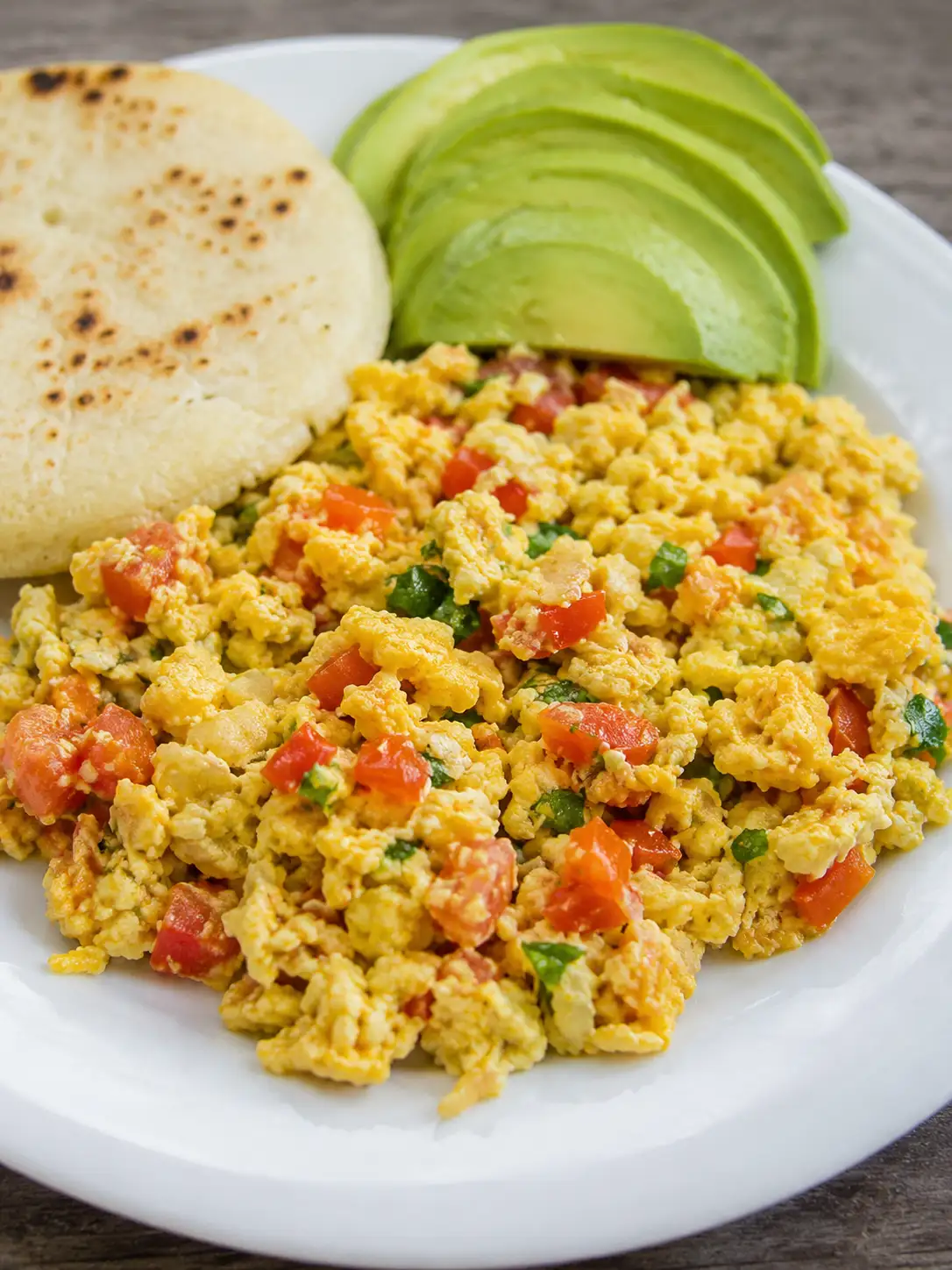
Perico (Venezuelan Scrambled Eggs)
Easy · 20 minutes · serves 4
Perico is scrambled eggs folded through a sofrito of onion and tomato, and it is what most Venezuelan mornings actually look like. Spooned into a warm arepa with a little white cheese, it is the national breakfast in one bite.
There is one rule and everything depends on it: cook the tomato down before the eggs go anywhere near the pan. Tomatoes are mostly water, and if that water is still in the skillet when you add eight beaten eggs, you get a loose, weeping scramble instead of soft curds. Cook the sofrito until dragging a spatula briefly exposes the base of the pan.
After that it is a question of restraint. Drop the heat, let the eggs sit for twenty seconds before you touch them, then fold in large slow movements and pull the pan off while they still look glossy. Carryover heat finishes them somewhere between the stove and the table.
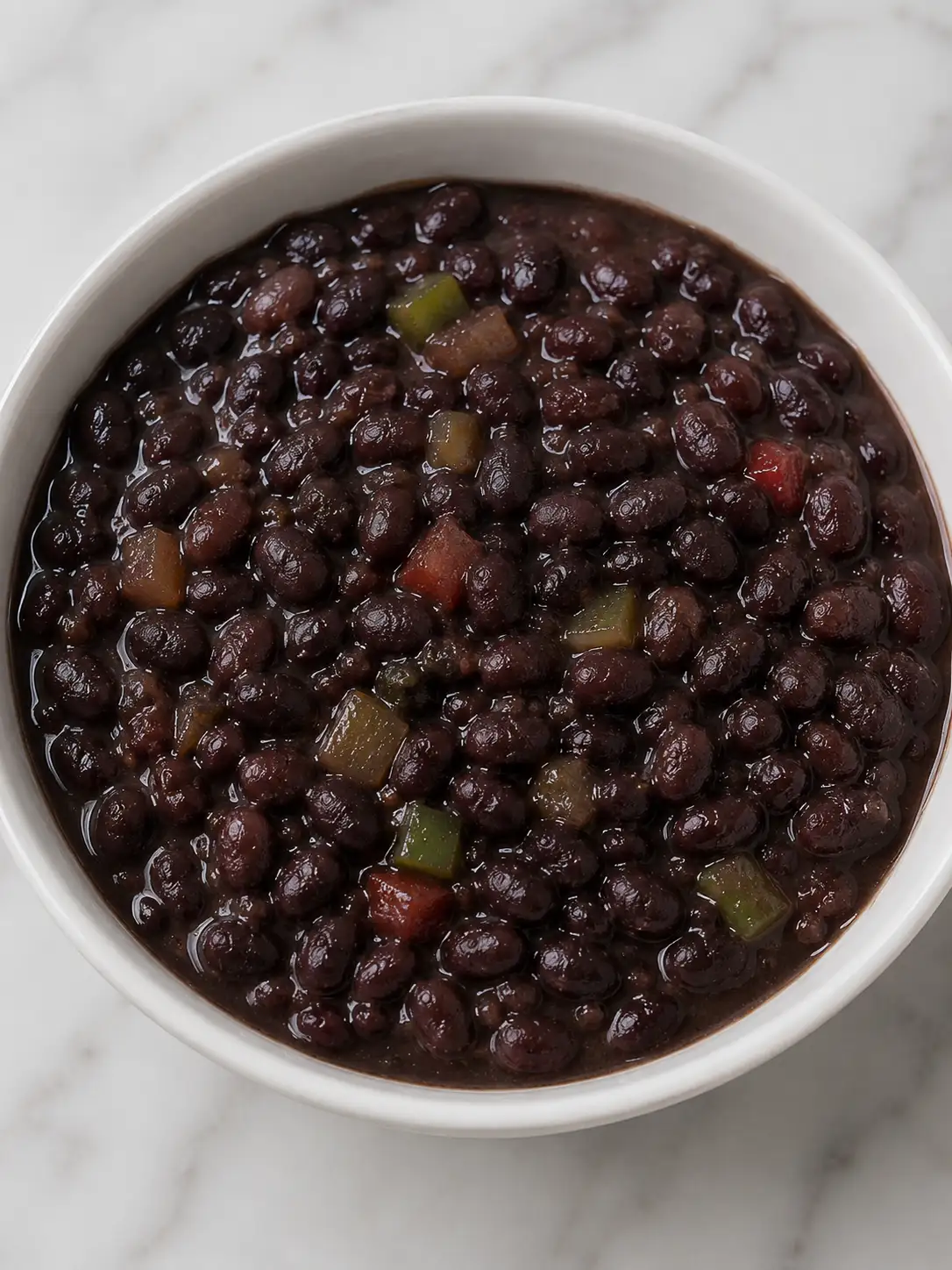
Caraotas Negras (Venezuelan Black Beans)
Easy · 40 minutes · serves 6
Caraotas negras are black beans simmered with onion, pepper, garlic, and cumin until they turn thick and glossy. They appear everywhere: alongside rice, spooned into arepas with grated white cheese, and as one quarter of pabellón criollo.
This is the dish to cook first, for a practical reason. Beans hold and reheat better than anything else here, and their flavour genuinely improves after a night in the fridge, so making them a day ahead is an advantage rather than a compromise. Using canned beans brings the whole thing in under forty minutes without much loss.
The thickening trick is worth stealing for other cooking: mash about half a cup of the beans against the side of the pan and stir them back in. It gives body without flour or cornstarch, and it keeps most of the beans whole. One genuine fork in the road is sweetness, since some central Venezuelan households add a little papelón and others would find that heresy.
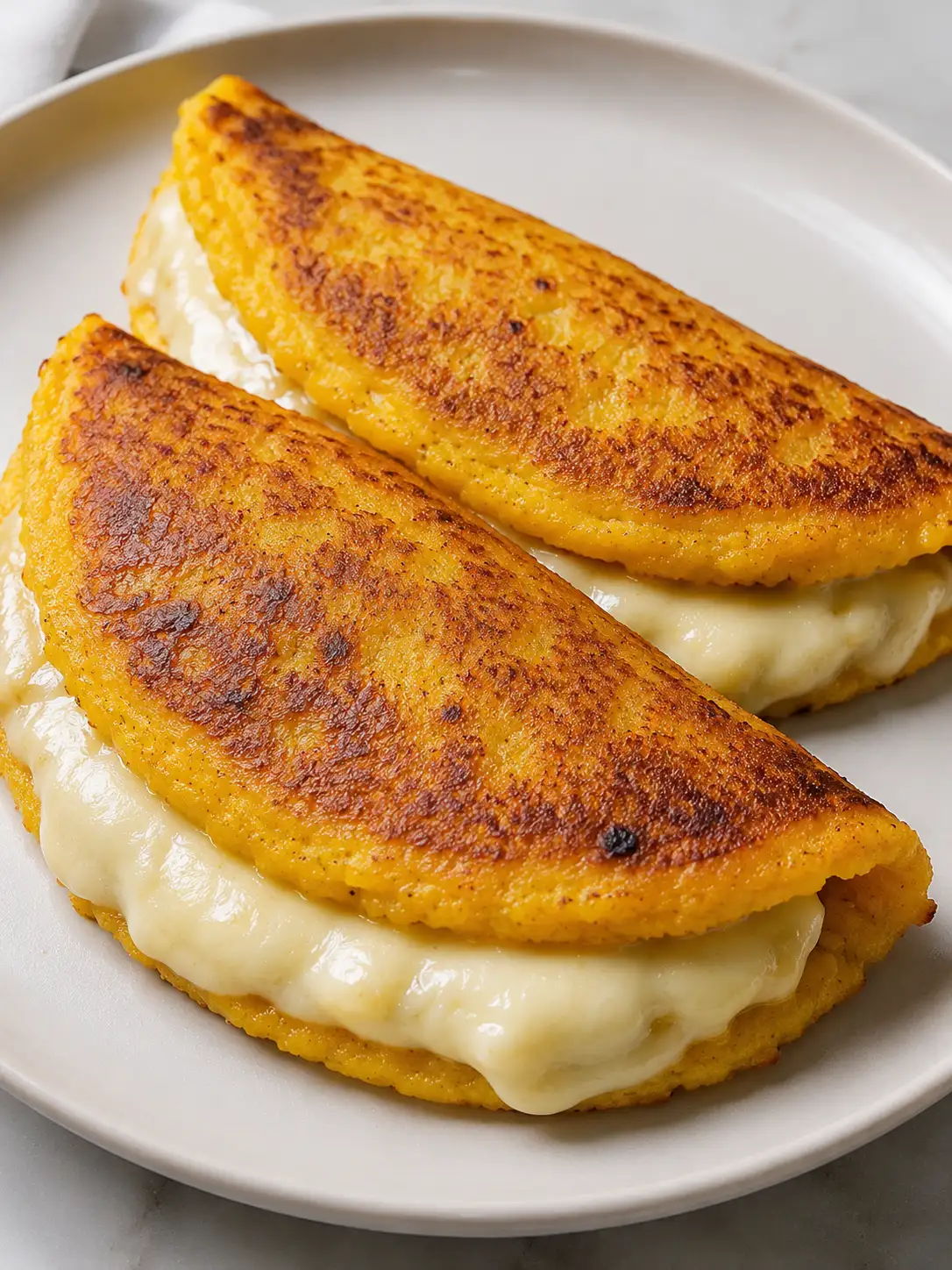
Cachapas with Cheese
Easy · 40 minutes · makes 4
A cachapa is a sweet corn pancake folded around soft white cheese so it melts at the edges. It is sweet and salty at once, and it is usually the dish that converts people who came to Venezuelan food out of curiosity.
The batter is blended fresh corn rather than flour, which is what makes it unlike any pancake you have made before. Do not blend it smooth. You want it cohesive but still visibly speckled with broken kernels, because over-blending releases starch and gives you something dense and gluey instead of tender.
Corn batter has no gluten holding it together, so it needs to set before it can be moved. Cover the pan for the first side and wait for bubbles across the middle and dry-looking edges, then flip in one confident motion. A cachapa that tears was almost always flipped early, spread too wide, or a touch too wet.
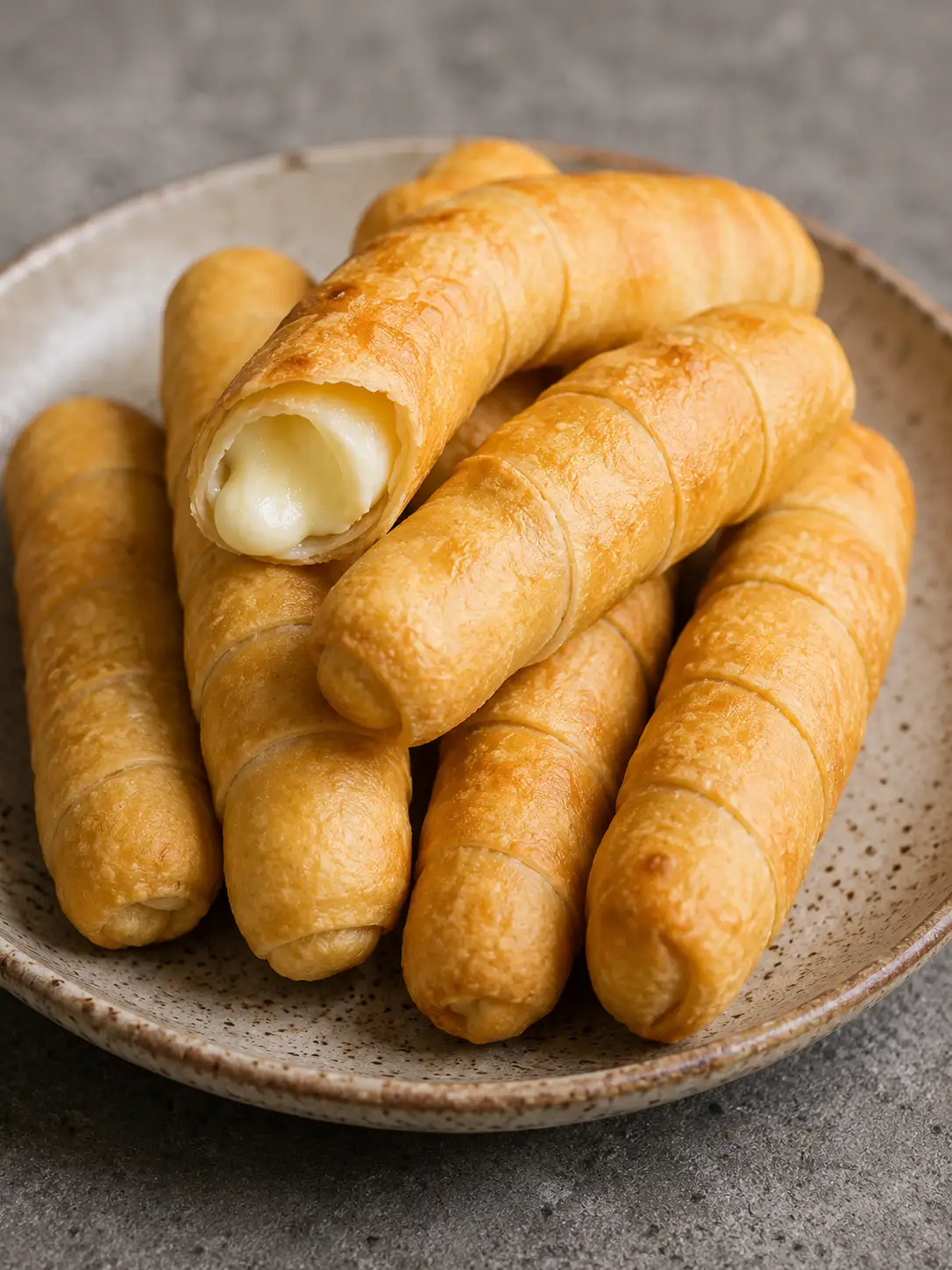
Tequeños (Venezuelan Cheese Sticks)
Medium · 60 minutes · makes 12
Tequeños are strips of soft dough wound in a spiral around a stick of firm white cheese and fried until blistered and golden. They are the default Venezuelan pasapalo, which is to say the thing that appears at every party, and they disappear faster than anything else on this list.
They take the most handwork of the six, though none of it is difficult. The dough is kneaded briefly and rested twenty minutes so it stretches rather than tears, then rolled thin and cut into strips. Each strip wraps diagonally around the cheese with every turn overlapping the last by about a third, so there is no seam running the length of the stick.
Leaks are the only real failure, and they come from three places: a torn strip, turns that did not overlap, or an open end. Keep the cheese cold, pinch every seam, and inspect each one before it goes near the oil. The reward is that they freeze beautifully raw, so you can make a batch now and fry them straight from frozen months later.
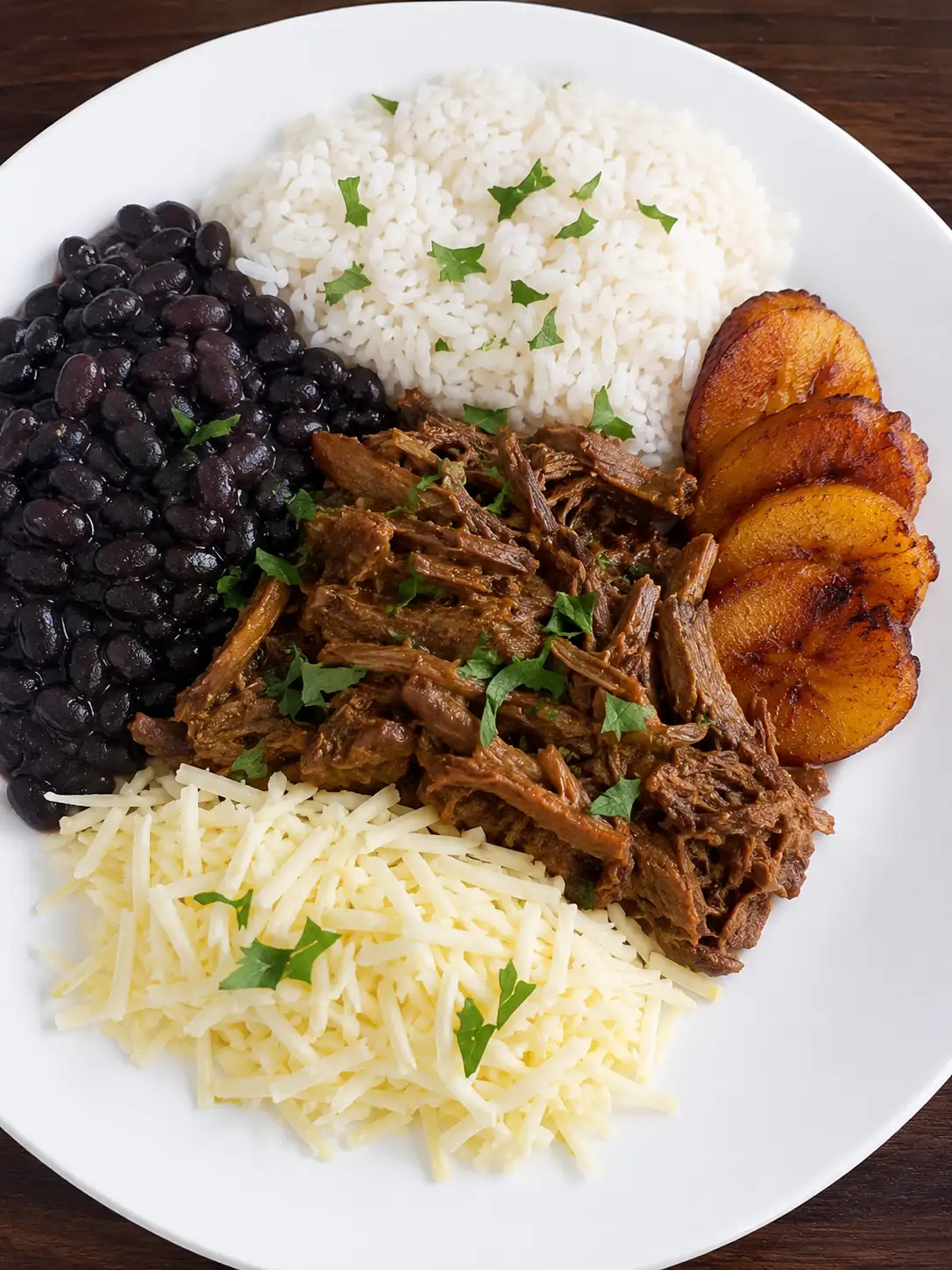
Pabellón Criollo
Medium · 70 minutes · serves 4
Pabellón criollo is Venezuela on a plate: shredded stewed beef, black beans, white rice, and caramelised ripe plantain, kept in four distinct sections rather than mixed. Arrange the plantain around the rim and it becomes pabellón con baranda, the railing version.
It reads as the hardest dish here and it genuinely is not. What makes it stressful is cooking four things one after another. Run them in parallel instead: beef under pressure first, rice on the moment that cycle starts, one shared sofrito built while both are busy, then beans and beef simmering side by side and plantains fried last.
That shared sofrito is the detail that ties the plate together. Onion, pepper, and garlic soften into a single base, a third of it is set aside for the beans, and the rest carries the beef. It saves a pan and, more importantly, it makes four separate components taste like one dish. Use plantains whose skins are almost fully black, since yellow ones stay starchy and will not caramelise.
What to cook first
If you are cooking Venezuelan food for the first time, do not start with the national dish. Start with a breakfast, because it is the meal the cuisine is built around and it teaches you the two techniques everything else depends on: hydrating corn dough, and reducing a sofrito.
The order matters more than you would expect, and it follows how well each dish holds. Caraotas first, ideally the day before, because beans reheat well and taste better for the wait. Arepas second, since they want to be eaten warm. Perico last, because eggs deteriorate faster than anything else and should go from pan to plate in under a minute.
That gives you a genuine Venezuelan breakfast for four people, from a standing start, in about an hour of actual work spread across two days. Split an arepa, spoon in perico, add a little white cheese, and put the beans alongside. If you want the classic combination by name, an arepa filled with black beans and grated cheese is an arepa dominó, so called because it comes out black and white.
Once that feels comfortable, cachapas are the natural next step, since they use the same skillet instincts on a wetter batter. Save tequeños for a weekend when you have an hour and somebody to share them with, and pabellón for when you want to cook something properly.
Building a meal out of them
These dishes were never designed to be eaten in isolation, and they combine in ways that are worth knowing before you plan a menu.
Breakfast or a light supper. Arepas with perico and cheese, beans on the side. This is the everyday combination and the one most Venezuelans would recognise immediately. Cachapas can replace the arepas for something sweeter.
A dinner party. Tequeños with a bowl of guasacaca while people arrive, then pabellón criollo as the main event. It looks far more elaborate than the work involved, particularly since the tequeños can be wrapped and frozen weeks in advance and fried straight from the freezer.
A big shared lunch. Pabellón is already four dishes in one, so it needs nothing beside it except perhaps an extra bowl of beans and a stack of arepas for anyone who wants to build their own. The four components are also a genuinely good arepa filling on their own the following day.
The overlap is the point. Caraotas negras go inside arepas, alongside rice, and into pabellón. The same sofrito technique carries the beans, the eggs, and the beef. Cook two of these dishes and you are most of the way to a third.
The shopping list
What is striking about cooking all six of these is how short the list stays. There is no specialist spice rack to build, and the same handful of vegetables does most of the work.
- The one specialist item: masarepa, precooked corn flour. Everything else is standard.
- Aromatics, used in almost everything: onions, tomatoes, garlic, red or green bell pepper, cilantro.
- Store cupboard: canned black beans, tomato sauce, ground cumin, dried oregano, long-grain white rice, neutral oil, plain flour.
- Fresh and chilled: eggs, butter, milk, sweet corn (fresh or frozen), very ripe plantains, flank or skirt steak.
- Cheese, and it matters which: a soft melting white cheese for cachapas and arepas, and a firm frying cheese for tequeños. See below.
Cumin and oregano are the only dried spices on the list, which tells you something about the cuisine. The flavour comes from cooking vegetables down properly rather than from a cupboard.
Cheese is where substitutions go wrong
Every other swap on this list is forgiving. Cheese is not, and the reason is that these dishes ask two completely different things of it.
Cachapas and arepas want a cheese that melts. Queso de mano and queso guayanés are traditional: soft, mild, fresh, and yielding. Outside Venezuela, low-moisture mozzarella is the closest widely available match for that combination of mildness and melt. Queso fresco tastes right but stays stubbornly firm, which is fine in an arepa and disappointing in a folded cachapa.
Tequeños want a cheese that holds. The whole point is a shell that fries golden around cheese that softens without escaping, which needs a firmer, drier cheese. Queso llanero is traditional and queso de freír, literally frying cheese, is the most reliable substitute. Mozzarella can work but leaks noticeably more, and fresh mozzarella packed in water will flood the oil.
So the trap is assuming one cheese covers everything. The mozzarella that behaves perfectly in a cachapa is exactly the cheese most likely to burst out of a tequeño. If you are buying for a whole Venezuelan spread, buy two.
Ají dulce, and what to use if you cannot find it
Ají dulce is the small wrinkled pepper that gives a great deal of Venezuelan cooking its particular aroma. It looks like a habanero and shares its fruity perfume while carrying almost none of the heat, which is exactly why it is used so widely: it seasons without burning.
It is genuinely worth seeking out at a Latin grocer, where it is often sold frozen, and it is equally genuinely optional. A small amount of red bell pepper is the practical substitute and appears in plenty of published Venezuelan recipes as an alternative. You lose some of the perfume and none of the structure of the dish. Do not reach for a hot chili instead, since heat is not what it is contributing.
Start with one bag of corn flour
The barrier to Venezuelan cooking is not skill or equipment. It is that most people have never been shown where to begin, and the answer is smaller than it looks: one bag of masarepa, some onions and tomatoes, and a can of black beans. That is a Venezuelan breakfast for four, and it is roughly an hour of work.
From there the cuisine opens up quickly, because the techniques repeat. Once you can hydrate corn dough you can make arepas forever. Once you can reduce a sofrito properly you have the backbone of the beans, the eggs, and the beef. Everything else is variation.
Every dish here has a full recipe with quantities, timings, and troubleshooting, and you can browse all of them together in our Venezuelan recipes collection. If you would rather start with the corn cake everything else gets built around, go straight to the arepas. There is more in our kitchen guides when you are done.
Frequently Asked Questions
What is the easiest Venezuelan dish to make at home?+
Caraotas negras, the black beans, because they are forgiving and improve overnight. Arepas are a close second and need only corn flour, water, and salt, though they take a little practice to judge the dough. Perico is the fastest of all at twenty minutes. Between them those three make a complete Venezuelan breakfast.
What ingredient do I need for Venezuelan cooking?+
Masarepa, sold as precooked corn flour or harina de maíz precocida and most often under the P.A.N. brand. It is the foundation of arepas and it is not interchangeable with cornmeal, polenta, cornstarch, or Mexican masa harina. One bag opens up most of the cuisine and costs very little.
Is Venezuelan food spicy?+
Generally not. Venezuelan cooking is savoury and corn-forward rather than chili-hot, and the pepper it leans on most, ají dulce, contributes aroma and sweetness with almost no heat. Hot sauce appears on the table as an option rather than being cooked into dishes, which surprises people expecting something closer to Mexican food.
What is the Venezuelan national dish?+
Pabellón criollo: shredded stewed beef, black beans, white rice, and fried ripe plantain served in four distinct sections on one plate. When the plantain slices are arranged around the rim it is known as pabellón con baranda, baranda meaning railing. It is the most involved dish here but not a difficult one.
What cheese should I use for Venezuelan recipes?+
It depends on the dish, and this is where substitutions most often go wrong. Cachapas want a soft, mild, melting cheese such as queso de mano or guayanés, with low-moisture mozzarella as the practical stand-in. Tequeños need a firmer cheese that softens without running, so queso de freír or queso llanero, since mozzarella tends to leak in the fryer.
Can I cook Venezuelan food without a Latin grocery store?+
Mostly yes. Masarepa is now stocked by many mainstream supermarkets and is easy to order online, and everything else on the shopping list is standard: eggs, onions, tomatoes, bell peppers, garlic, canned black beans, corn, plantains, and beef. Only the traditional cheeses and ají dulce genuinely benefit from a Latin grocer, and both have workable substitutes.